Licensed match-3 games occupy an odd position. Reviewers tend to dismiss them as cash-ins and players tend to install them because the artwork is familiar, and both reactions skip the interesting question: does the licence do anything to the game itself? Sometimes it genuinely does.
Piece design gets easier
The hardest problem in designing a matching board is making six pieces that are instantly distinguishable at thumbnail size. An original game has to invent them. A licensed one inherits a cast of objects that already look different from one another, because they were designed to be recognised in a film or on a shelf.
That is a real advantage, and you can see it on the board: licensed confectionery puzzles tend to have stronger silhouettes than their generic competitors, whose pieces are frequently the same rounded shape in six colours.
Tone becomes a constraint
A licence comes with brand guidelines. Colours are fixed, characters cannot be redrawn, and the aggressive interface patterns that unlicensed free-to-play games use freely — flashing timers, urgent red badges, hard sells after a loss — are often toned down because the brand owner will not approve them. The result is frequently a calmer game than its independent equivalent.
The update cadence is somebody else's decision
Licensed titles often tie their events to the brand's calendar: a film release, an anniversary, a seasonal promotion. That keeps content flowing while the brand is being actively marketed, and it slows down noticeably when the marketing stops. Reading the update history of a licensed puzzle tells you as much about the brand's plans as about the studio's.
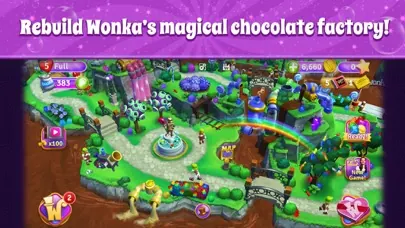
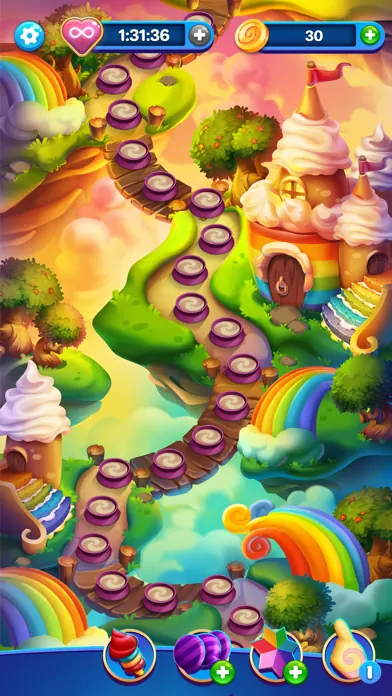
Screenshots from the official Australian store listings. All rights remain with the publishers.
And the licence can expire
This is the part players rarely consider. Licences run for a term. When one lapses and is not renewed, the game is usually withdrawn from sale — sometimes remaining playable for existing owners for a while, sometimes shutting down entirely because its servers are switched off. It has happened repeatedly across mobile gaming, and it is the single genuine risk of investing time in a licensed title.
It is not a reason to avoid them. It is a reason not to spend heavily in one.
Reading a licensed puzzle honestly
- Judge the board, not the brand. If the pieces are clear and the goals are readable, the licence has earned its place.
- Check the update history before committing months to it.
- Notice whether the interface is calmer than the genre standard. Often it is, and that is worth something.
- Assume the game may not be purchasable forever, and treat purchases accordingly.